Treatment approach
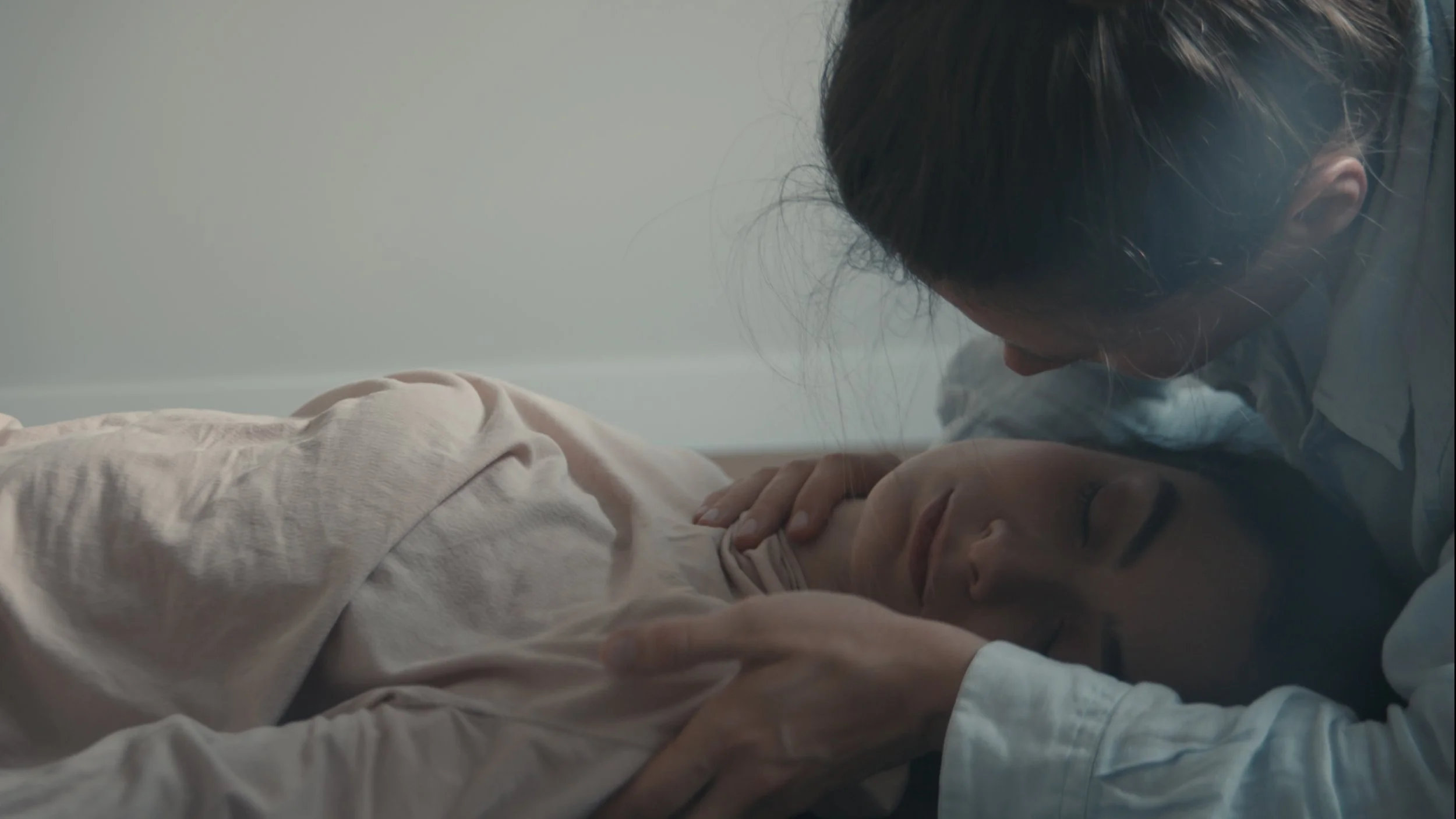
Touch can be understood as an environment, meaning it can invite states of novelty and responsiveness that may be difficult to access on our own.
There is a phenomenon known as the orienting reflex: an immediate response of an organism to a change in its environment, provided that the change is not abrupt enough to trigger the startle reflex. This term was coined by physiologist Ivan Pavlov, who referred to it as the “Shto eto takoe?” reflex—“What is this?”. The orienting response represents a moment of openness. In the 1950s, Russian scientist Eugene Sokolov documented a related process known as habituation, describing the gradual decrease of this response as stimulation becomes familiar.
Simply stroking a stone will not turn it into a sculpture. As the potter probes into the clay, the clay also shapes the potter’s touch. With bodies, from both sides, instead of a fixed technique, the discovery is only as deep as the wondering of “what is this?”
More specifically
Soft and hard tissues exert a reciprocal action upon one another. Treating isolated parts of the body is therefore not an option, everything interacts. A movement in the foot expresses itself in the crown of the head, whether it is consciously felt or not. With persistent knots of contraction, internal harmonies are disrupted, creating disorder. The body continues to search for holism through compensatory patterns, but where blockages accumulate, movement cannot pass freely. This stagnation can express itself in many forms, including seemingly unrelated behavioral or emotional patterns.
From a bio-electrical perspective, living tissue is not inert. Cells maintain electrical potentials and behave as dynamic, oscillating systems, each with their own rhythms and ranges of activity. Health can be understood as coherence, meaning the ability of these oscillations to adapt, respond, and resonate across the whole organism. When coherence is reduced, the system becomes less responsive and more rigid.
When blockages begin to resolve, order accumulates. For this to occur internal conditions must be supported and appropriate stimulation introduced. The process I offer is one of tuning. Like a musical instrument, the body has its own strings of tension. I aim to introduce resonance — encouraging new patterns and capacity for self-organization. Central to this process is the experience of novelty within the body, a return to the question: “What is this?”
Terminology
Resonance — a state in which cells, tissues, or organ systems respond optimally to internal or external stimuli because the frequency of the stimulus aligns with their natural oscillatory rhythms. This can improve coordination and adaptability within the body. Example: heart and respiratory rhythms synchronising during calm breathing. In this text, “resonance” refers both to physiological alignment and the broader sense of the system finding its rhythm.
Holism — the principle that all functions of the body are interconnected and cannot be fully understood or treated in isolation, that includes immediate external environment. The whole is greater than the sum of its parts.
Orienting reflex — an immediate response to a novel stimulation, allowing the organism to turn toward changes in the environment without triggering a startle.
Habituation — the gradual reduction of the orienting reflex as stimulation becomes familiar.
Coherence — organised, harmonious functioning of cells, tissues, and organ systems as well as the capacity of the body to respond adaptively to internal and external influence.